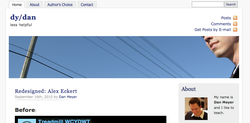
At the end of the day, the whole reason we integrate technology is to create students that create the questions, not just the answers. Recently I discovered (through TEDtalks tweet) an amazing high school math teacher named Dan Meyer, click here for his blog. Dan presented at the TED conference and talked about re-inventing how math is taught. basically, Dan doesn't give homework, hates textbooks, and wants to create "patient problem-solvers". His presentation is the video below this blog post. I love the term "patient problem-solver". To me it evokes imagery of students using the scientific method in a social studies classroom. Students observe something happening in the world around them, create a hypothesis of why it is happening, then formulate questions to answer using historical resources. How great would it be if students applied patience, collaboration and technology to understand why the world works.
Students could skype students around the world, or professors from major universities specializing in particular areas of history, scour the internet for historians blogs and primary resources, then test their data against their hypothesis. Maybe they were right, maybe they were wrong. Either way students have complete ownership of this academic journey. From observation, to asking the question, to solving the question. Students can take days, or weeks to solve one major question; and along the way....accidental learning will take place. Students will be exposed to research tangents that pull in information, create connections with others, and hone their critical thinking skills. All of this is possible if you model patience with your students. Dan Meyer talks about how textbooks create problems that mirror contemporary sit-coms. Everything can be solved in a 1/2 hour. Only problem is that the world doesn't work that way. As Dan says, have you ever seen a problem worth solving that can be accomplished in a 1/2 hour?" (I'm paraphrasing here) Take a second and watch his presentation and then please leave a comment expressing your opinions. Just think, maybe answering 4 or 5 big questions in an entire school year will provide a better education than weekly assessments and a yearly 40 question standardized test.
-Mike
Students could skype students around the world, or professors from major universities specializing in particular areas of history, scour the internet for historians blogs and primary resources, then test their data against their hypothesis. Maybe they were right, maybe they were wrong. Either way students have complete ownership of this academic journey. From observation, to asking the question, to solving the question. Students can take days, or weeks to solve one major question; and along the way....accidental learning will take place. Students will be exposed to research tangents that pull in information, create connections with others, and hone their critical thinking skills. All of this is possible if you model patience with your students. Dan Meyer talks about how textbooks create problems that mirror contemporary sit-coms. Everything can be solved in a 1/2 hour. Only problem is that the world doesn't work that way. As Dan says, have you ever seen a problem worth solving that can be accomplished in a 1/2 hour?" (I'm paraphrasing here) Take a second and watch his presentation and then please leave a comment expressing your opinions. Just think, maybe answering 4 or 5 big questions in an entire school year will provide a better education than weekly assessments and a yearly 40 question standardized test.
-Mike
 RSS Feed