Ditital History: Engage students 05/04/2010
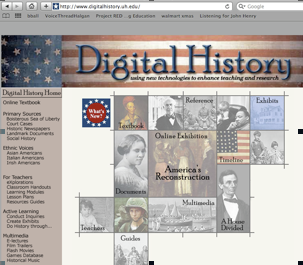
I mentioned the website Digital History from University of Huston before in a blog about content vs. skill. A quote from their site: “The American Council of Trustees and Alumni, a Washington-based nonprofit group that promotes liberal-arts study, posed 34 high-school level questions randomly to 556 seniors at 55 leading colleges and universities, including Harvard, Princeton and Brown. Only one student answered all the questions correctly, and the average score was 53 percent.” This link will take you to the test. Give it a shot and let me know how you scored. But I wanted to encourage more American History teachers to explore this site: See the homepage. So much digital content to explore and engage your students in active learning: Voices of immigrants telling their story, online exhibits on a varity of 19-20th century topics, handouts and guides for instruction, not to mention, historical reference room and much, much, more. As a matter of fact, I will be using the following link in two weeks with my 7th graders in a discussion of Europeans impact on the Americas. I will let you know how it goes. Europeans discover: http://www.digitalhistory.uh.edu/historyonline/us1.cfm In the mean time, let me know how digital history can impact your classroom. Cheers, Garth Add Comment Speaking Civil Rights 04/27/2010
Yesterday I attended a workshop hosted by Teaching America History, Sounds of History grant program (which I have discussed before). The guest speaker was Marc Selverstone from theMiller Center of Public Affairs. He works with collecting, digitizing and sorting the secret recordings and other sounds from U.S. Presidents. Dr. Selverstone took us through the U.S. Civil Rights Movement using sounds from the people that were there; Presidents, generals, governors, senators, etc. This was an amazing journey through a time in U.S. history that has always fascinated me. The information and sounds provided by Dr. Selverstone put a new perspective on several key events of the 1950s and 1960s. Listening to the “backdoor” dealings of important political figures made real the politicking that underlined the events of the Civil Rights Movement. It was amazing to listen to politicians, sometimes from different parties, talking very candidly about their personal feelings, give-and-take negotiations and how to resolve situations. I highly recommend looking at the Miller Center for primary source recordings when teaching any American History, foreign and domestic policy. Not only do the recordings give insight into important events, but these recordings also humanize the Presidents. Often teachers and students loose sight of the fact that the Presidents are men, with feelings and aspirations. They have to balance so many variables and they do not get to “go home” after work. I would definitely pre-listen to all audio; these are adults and their language is not always appropriate for school! -Mike Knowing where you come from 04/22/2010
The video below was created by Garth and I while participating in the Teaching America History: Sounds of History grant program sponsored by the ESC of Cuyahoga County and Cleveland State University’s Department of History. This 3 year program exposed to me to invaluable digital content for teaching history. One such source is the digital archive of the City Club of Cleveland. There are several other blog topics about the resources Garth and I have used because of the Sounds of History Program. Just click "sounds" in the categories to the left. We were inspired to create this video after listening to several speeches by Carl Stokes, the first African-American mayor of a mayor of a major U.S. city, contained in the digital archives of the City Club of Cleveland. Garth and I discovered that racism within the political workings of Cleveland, at the time, pinned Mayor Stokes against the police and most other public officials of the time. Garth and I jumped on my motorcycle, Garth in the sidecar and headed to Glenville to re-trace the events that started the Glenville Riots. We found where the first casualties, Fred Evans and seven others, occurred. We spoke to several Glenville residents who remembered the riots and we were able to "live" Cleveland history. The film we created was meant to be an introduction to the Glenville Riots for students. A moving piece of media, the film is the catalyst to inspire students to become historical detectives and research the history of the Riots. The film has been on YouTube for almost 1 year, and we have had nearly 1,000 viewings and several comments. Collaboration meets digital media all thanks to the wonderful resources introduced to us from the Sounds of History Grant Program. -Mike Do Schools Kill Creativity? 04/21/2010
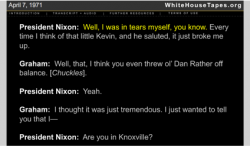
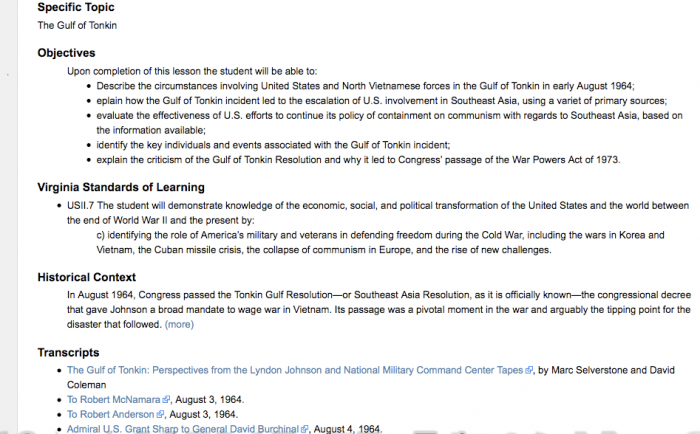
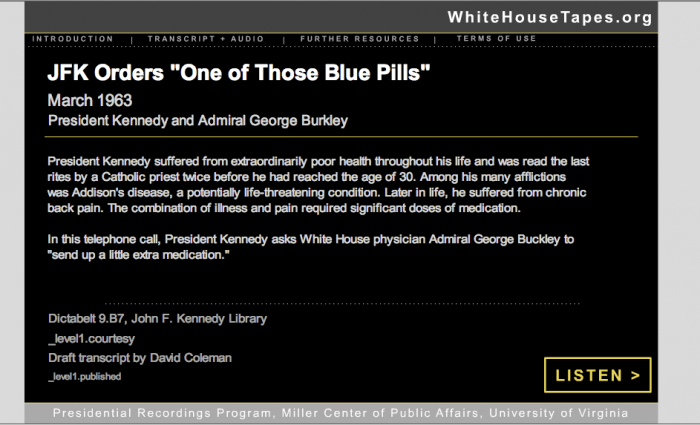
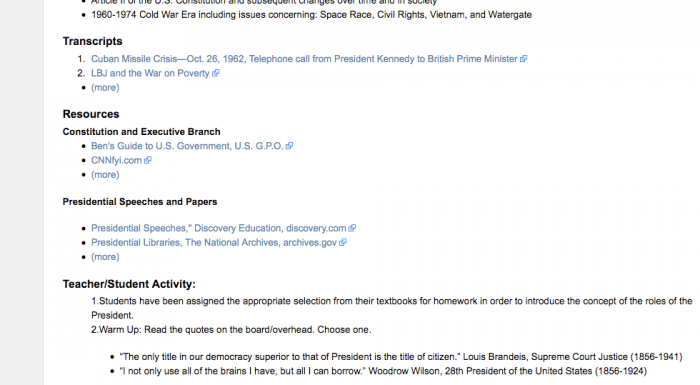
Technology, Entertainment, Design = TED.com . If you have not visited Ted.com, you have been missing a wealth of knowledge on modern and historical issues. I have been a listening for over three years. In fact, by using Itunes, you can RSS feed and never visit the website. Then just read the description, click and download the ones you want and forget the others. Ituens then downloads and you can put them on your ipod. Listen while you workout, walk, work on the computer or whatever you do as you listen to your Ipod. One of my personal favorites: Sir Ken Robinson: Do schools Kill Creativity? Give it a listen and then tell me what you think about his comments. ![]() WhiteHouse.net Tapes: Over 4700 hours of secret tapes from the White House Over the last few years, I have taken part in a grant TAH (Teaching American History) and have had the pleasure to work with Marc Selevrstone, from the Miller Center. Marc is a major player in the website, White House Tapes. This website has thousands of hours of secretly taped conservations between the President and a number of other important government offices. Each conservation is created with a flash video transcript of the conversation and formal written transcripts. However, the greatest feature is to hear the individuals talk: the tone, the stutter, the cuts offs, the pauses the small things that explain so much. It is powerful stuff and sheds light on the true workings of the Office of the Presidency. The site has several pages to navigate through for specific recordings, from specific Presidents. I like to use the classroom/topic option. This link will take you to the general topics covered in the tapes. From here you can click the live links to hear the conservation. A few to get you interested. President Johnson on Haggar Pants. Some crude language. President Kennedy discussion with White Birmingham leaders after the church bombing. President Kennedy “You’re In a Pretty Bad Fix” Cuban Missile Crisis President Kennedy: South Vietnamese Coup and Assassination of Diem…John John enters. FDR and Philip Randolph on African Americans and the U.S. Military early 1940’s LBJ and Mrs. Nathan Schwerner: Mississippi Burning Case. They also have entire teaching units created that tell the stories in chorological order of the conservation with background information. The images below give you an example of what you will find. How could using this site change the teaching of History in your classroom? I encourage you to explore this resource and comment how you used this site and what your students had to say about what they learned. I think you will be happy with the results. Garth History by the people that were there... 02/17/2010
Last month, I began teaching feudalism and the Middle Ages of Europe. I purposely started this new unit of study the week before Martin Luther King Jr. Day. Going into the week of MLK Day, I gave a brief explanation of the feudal social classes. Students worked in an extended "Think/Pair/Share exercise where they were responsible for creating social classes in the school, their community and the country. Most students created groups based on popularity; as it was explained to me, "...popularity gives you power like money would have given you power in the Middle Ages". The week of MLK day I used the Civil Rights Movement and the 1950s/1960s to talk about social classes and who had the power in America during these times. As teachers often do, I assumed students had a good grasp on what life was like for African Americans during the 50s and 60s. I was wrong. We talked about the major events of the Civil Rights Movement and the beliefs of some of the key players. I also showed a movie from the Teaching Tolerance program. Like most lessons, the current day connections became more interesting and important than the historical connections. Students had lots of questions about social inequality, enough so that I decided to spend more time talking about American history and doing history backwards (present to past). I used a great website created by the Library of Congress called Voices From The Days of Slavery. The site contains audio interviews of former slaves. I played several narratives for the students and had them fill out sound analysis worksheets available from the National Archives (I changed it to fit my needs). Students were captivated by these narratives. It was the first time they had "heard" history from the people that lived it. The impact of listening to these narratives, compared to reading each narrative, was tremendous. Students became engaged in why any society feels the need to create social inequality. Several of my classes had great debates centered around the argument of whether social inequality is created by people, or naturally occurs because of human nature. The point of all this...Students gained more depth of understanding of a topic in my class becuase of the use of technology. The video and the audio narratives engaged students in conversations, compelled them to investigate further information independently, and allowed them to use critical thinking (higher-level) skills to understand the past using the present. My students took time to think about the world and the enduring impact social classes and inequality has on the world around us. Students are still making reference to the narratives and have even brought in articles from local newspapers with questions about the impact of social inequality on current events. I may have moved on in class, but students are continuing to discuss a topic that is over a month old. -Mike | CategoriesAll ArchivesFebruary 2012 |


RSS Feed