Garth and I have had a pretty incredible past two years. Besides being able to connect our students and collaborate on curriculum and technology initiatives; Garth and I have been able to travel to some amazing conferences and meet true innovators from around the world. We realized just how awesome it was when we returned to Boston for BLC12 this year and were able to reconnect with people we usually only see via twitter avatars.
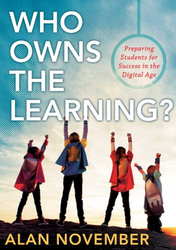
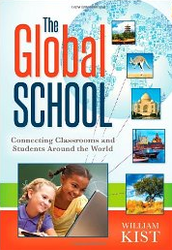
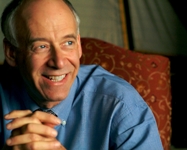
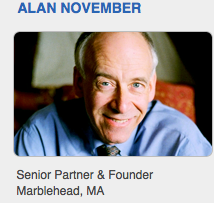
Another very exciting thing happened this summer. Alan November and William Kist both published books concerning technology in education. Garth and I are truly humbled, speechless and appreciative to be included in both texts. Both books are about using technology in education to connect students to the world and allowing them to leave their legacy. After we were friends for a year or two Garth and I both admitted that we have always wanted to write books . While we are not their yet, having our thoughts, our work and our words included in the books of these two great men inspires us to keep pushing education for our student's sake. It is a surreal experience to know that the world is watching. We plan to use these two books to help inspire and drive our students to achieve even greater
While these books cannot mention specific students or show some of our students' work over the past six years, Garth and I know that we owe everything to them. It is one thing to stand up in front of the class and ask them to create Medieval characters and document their lives over three hundred years, or write your own textbook for students around the world to read, but is quite an undertaking to inspire students to complete these tasks for no points, no grades, no credit. The amazing thing about our work is not the product of the students (although it is breath-taking sometimes), it is the fact that we are finding ways to create life-long learners that are inspired to have a voice in the world. Our students want to leave positive digital footprints. Our students want to help others learn. Our students want to independently investigate information for the sake of answering their own essential questions. Below is the closing lines of a poem by Taylor Mali, my favorite poet. It says it all, better than I ever could. Thank you Students and Garth for believing in me and allowing me to go along this most excellent journey with you!!
..."I just gave you what I knew you needed
before you had to ask for it.
Education is the miracle, I’m just the worker.
But I’m a teacher.
And that’s what we do."
-Taylor Mali
Another very exciting thing happened this summer. Alan November and William Kist both published books concerning technology in education. Garth and I are truly humbled, speechless and appreciative to be included in both texts. Both books are about using technology in education to connect students to the world and allowing them to leave their legacy. After we were friends for a year or two Garth and I both admitted that we have always wanted to write books . While we are not their yet, having our thoughts, our work and our words included in the books of these two great men inspires us to keep pushing education for our student's sake. It is a surreal experience to know that the world is watching. We plan to use these two books to help inspire and drive our students to achieve even greater
While these books cannot mention specific students or show some of our students' work over the past six years, Garth and I know that we owe everything to them. It is one thing to stand up in front of the class and ask them to create Medieval characters and document their lives over three hundred years, or write your own textbook for students around the world to read, but is quite an undertaking to inspire students to complete these tasks for no points, no grades, no credit. The amazing thing about our work is not the product of the students (although it is breath-taking sometimes), it is the fact that we are finding ways to create life-long learners that are inspired to have a voice in the world. Our students want to leave positive digital footprints. Our students want to help others learn. Our students want to independently investigate information for the sake of answering their own essential questions. Below is the closing lines of a poem by Taylor Mali, my favorite poet. It says it all, better than I ever could. Thank you Students and Garth for believing in me and allowing me to go along this most excellent journey with you!!
..."I just gave you what I knew you needed
before you had to ask for it.
Education is the miracle, I’m just the worker.
But I’m a teacher.
And that’s what we do."
-Taylor Mali

 RSS Feed