Ohio history standards require students to describe the enduring impacts of the ancient world: including Egypt, China, India, Rome, and Greece. The focus of this work is on the four following ideas: Development of Government, Cultural and scientific achievements, Spread of Religions and slavery or system of labor. This seems like a huge task for 7th grade students. However, over the years I have developed a unit based on inquiry and higher level thinking that has shown positive results.
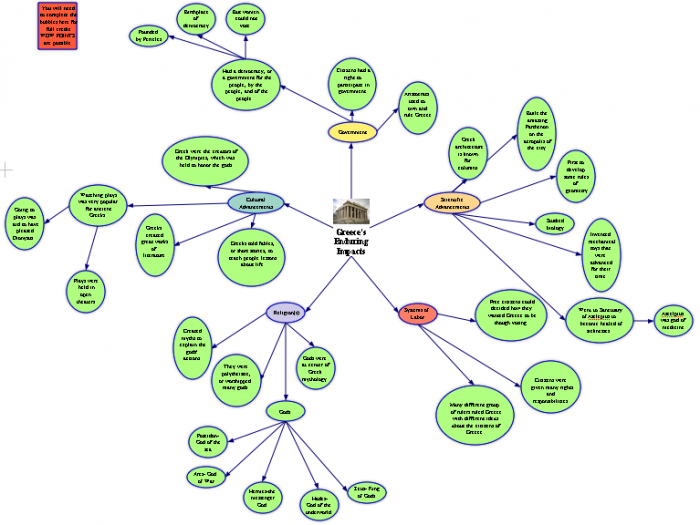
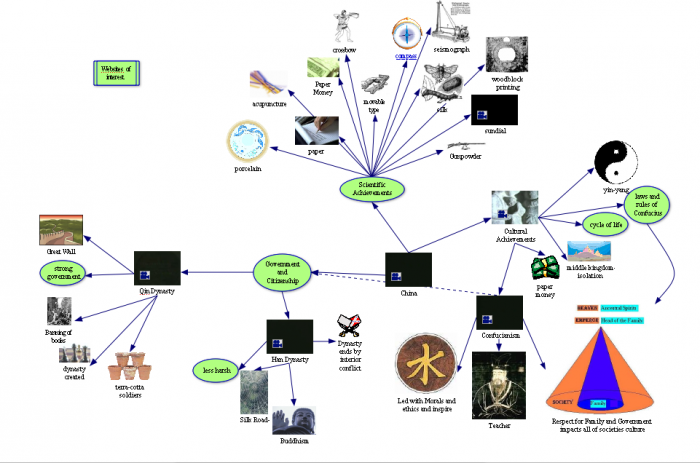
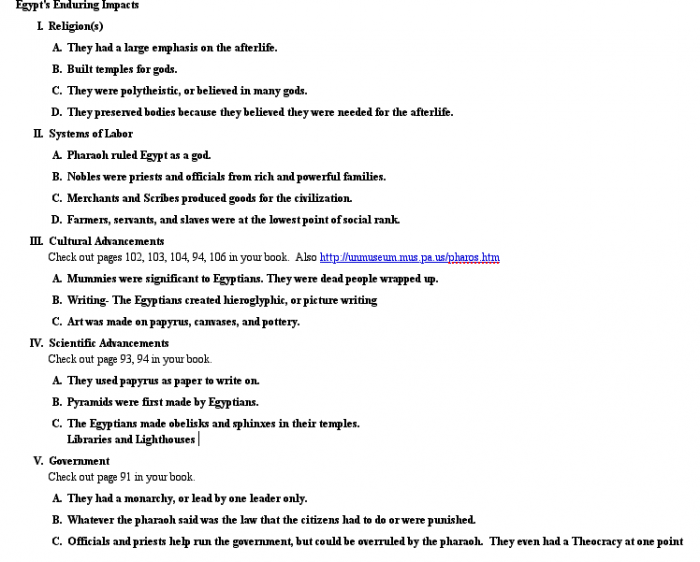
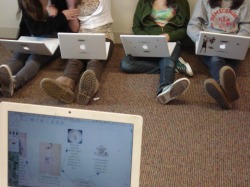
I began by using film from the web (teacher tube, You tube and Unitedstreaming, Even Infohio has free films). These films were embedded into the software inspiration--see photo Gallery below. Students then used the index in their textbooks to find specific information quickly in the book or students would be using headphones to watch film, rewind and fast-forward at their own pace, while others were reading websites provided from me. Students were using the learning style that best fits them. During this exploration period students add to the webs (similar free software online MindMeister or bubbl.us) After all students had a completed web (for some that was 30 ideas, for others that was 15 ideas), we moved to pairs to share what had been found. They added more and talked about what these things "really mean".
Next, these groups of two would pick out their top five enduring impacts from the society we were working on. These would be place on the board and a common theme would be discussed. Then as a class, we would discuss and vote on the five most important from each society to remember and understand. Then back to pairs to write out justifications as to why these are the top five for each country.
The exam scores were very high. I had students answering 15 Ohio Achievement Testing questions (from pass released OAT questions) and part two a take home exam. In the take home section students would look at images from "our" world and explain how they would not be possible without the Ancient World: I used a football Stadium. Students talked about the basics: cement, Arch’s, Columns, Realism in Art, paved roads, etc. but went much deeper. They talked about Civil Law and how sports could not be played without written laws to explain the process, they mentioned the Hindu Arabic Numerals and scoring, or the laying out the field, in fact several talked about Euclid and Geometry, and this list goes on and on. These kids were thinking and doing it in critical manner. . I can’t help but mention how one student even explained the computer as enduring from the ancient world: since it runs on zero’s and one’s.
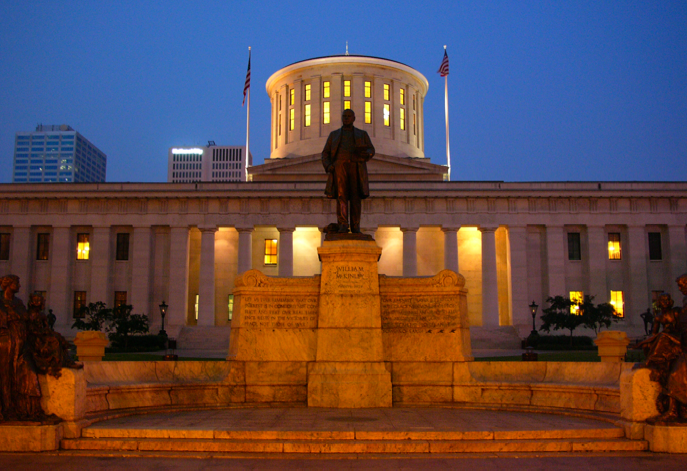
To show them one more major example, I asked the students to pull a state out of the hat and then find a large image of the statehouse. We then stood as a group at the back of the room and viewed, 20-25 images of American State Houses: only two are not Greece or Roman in architecture. They see us paying respect to Democracy in the Ancient world.
The combination of exploration, pair’s discussion, group and individual justification helped them to truly understand and see how the Ancient World impacts our world. I am pleased with the their work and believe it was teaching 21st Century skills.
I began by using film from the web (teacher tube, You tube and Unitedstreaming, Even Infohio has free films). These films were embedded into the software inspiration--see photo Gallery below. Students then used the index in their textbooks to find specific information quickly in the book or students would be using headphones to watch film, rewind and fast-forward at their own pace, while others were reading websites provided from me. Students were using the learning style that best fits them. During this exploration period students add to the webs (similar free software online MindMeister or bubbl.us) After all students had a completed web (for some that was 30 ideas, for others that was 15 ideas), we moved to pairs to share what had been found. They added more and talked about what these things "really mean".
Next, these groups of two would pick out their top five enduring impacts from the society we were working on. These would be place on the board and a common theme would be discussed. Then as a class, we would discuss and vote on the five most important from each society to remember and understand. Then back to pairs to write out justifications as to why these are the top five for each country.
The exam scores were very high. I had students answering 15 Ohio Achievement Testing questions (from pass released OAT questions) and part two a take home exam. In the take home section students would look at images from "our" world and explain how they would not be possible without the Ancient World: I used a football Stadium. Students talked about the basics: cement, Arch’s, Columns, Realism in Art, paved roads, etc. but went much deeper. They talked about Civil Law and how sports could not be played without written laws to explain the process, they mentioned the Hindu Arabic Numerals and scoring, or the laying out the field, in fact several talked about Euclid and Geometry, and this list goes on and on. These kids were thinking and doing it in critical manner. . I can’t help but mention how one student even explained the computer as enduring from the ancient world: since it runs on zero’s and one’s.
To show them one more major example, I asked the students to pull a state out of the hat and then find a large image of the statehouse. We then stood as a group at the back of the room and viewed, 20-25 images of American State Houses: only two are not Greece or Roman in architecture. They see us paying respect to Democracy in the Ancient world.
The combination of exploration, pair’s discussion, group and individual justification helped them to truly understand and see how the Ancient World impacts our world. I am pleased with the their work and believe it was teaching 21st Century skills.


 RSS Feed